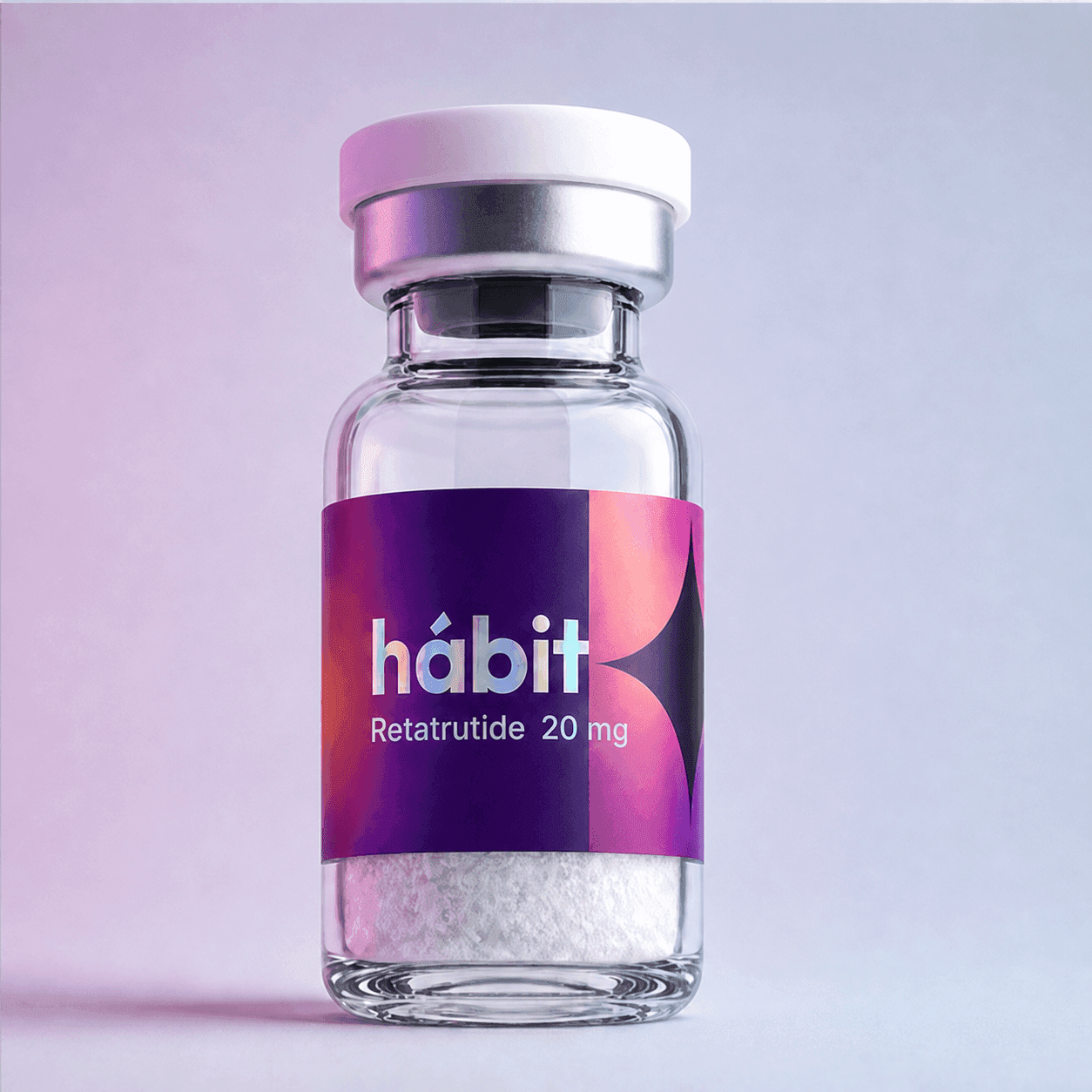
How it works
GLP-3 (RT) is a synthetic peptide that engages three glucose- and energy-regulating pathways from a single molecule: the GIP, GLP-1, and glucagon receptors. The added glucagon-receptor arm is the distinguishing feature — in published animal and clinical research it contributes to increased energy expenditure and hepatic lipid handling beyond what dual GIP/GLP-1 agonism produces. A C20 fatty-diacid moiety promotes albumin binding, extending plasma half-life to a once-weekly profile.
Learn more about the science →Certificate of Analysis+
Each GLP-3 (RT) vial ships with a batch-specific COA: peptide identity by LC-MS, purity by reverse-phase HPLC (≥99%), mass spec confirmation, endotoxin by LAL, residual solvent screening, and appearance. Third-party ISO-17025 verification.
View full certificate →Specifications+
Storage & handling+
Lyophilized: −20°C, 24 months unopened. Reconstituted: 2–8°C, use within 30 days. Reconstitute with bacteriostatic water; swirl, do not shake. Avoid repeated freeze-thaw.
We ship in insulated parcels with phase-change cooling and a tamper-evident seal.
FAQs+
How does GLP-3 (RT) differ from GLP-2 (TR)?+
GLP-2 (TR) is a dual GIP/GLP-1 agonist. GLP-3 (RT) adds a third arm — glucagon-receptor agonism — which in published research contributes to energy expenditure and hepatic lipid effects beyond the dual mechanism.
What does the glucagon-receptor arm contribute?+
In animal and clinical models the glucagon component is associated with increased energy expenditure and changes in hepatic lipid handling. It is the principal mechanistic difference from dual agonists.
What's the recommended reconstitution volume?+
Investigator-dependent. A common research preparation is 2 mL bacteriostatic water per 20mg vial, yielding 10 mg/mL.
Why is the 60mg vial more cost-efficient per milligram?+
Volume economics — per-milligram synthesis and handling cost falls at higher vial loading. Most multi-week protocols use the 60mg as working stock.
Is GLP-3 (RT) stable after reconstitution?+
In published stability work, stable at 2–8°C for at least 30 days when protected from light.
Is GLP-3 (RT) subscription-eligible?+
Yes. 15% off on a 60-day cycle.
The research behind this compound, cited in full.
Provided for context only. None of the studies cited below evaluate hábit material specifically; they document the published literature on the compound and its mechanism. Research-use claims are not therapeutic claims.
- [01] Coskun T. et al. Cell Metab 34 (2022): 1234–1247.
- [02] Jastreboff AM. et al. N Engl J Med 389 (2023): 514–526.
- [03] Rosenstock J. et al. Lancet 402 (2023): 529–544.
- [04] Triple-Hormone-Receptor Agonist GLP-3 (RT) for Obesity — A Phase 2 Trial
Verified buyer notes
Initials only — every quote is verified against an order record. We don’t ghost-write reviews.
“COA matched what we ran in-house. Powder reconstituted clean, no haze. Did exactly what we needed it to.”
“Switched after two bad lots from a previous source. Three orders in, zero issues.”
“Asked support a purity question and got the raw HPLC trace back within the hour. That transparency is why we reorder.”